

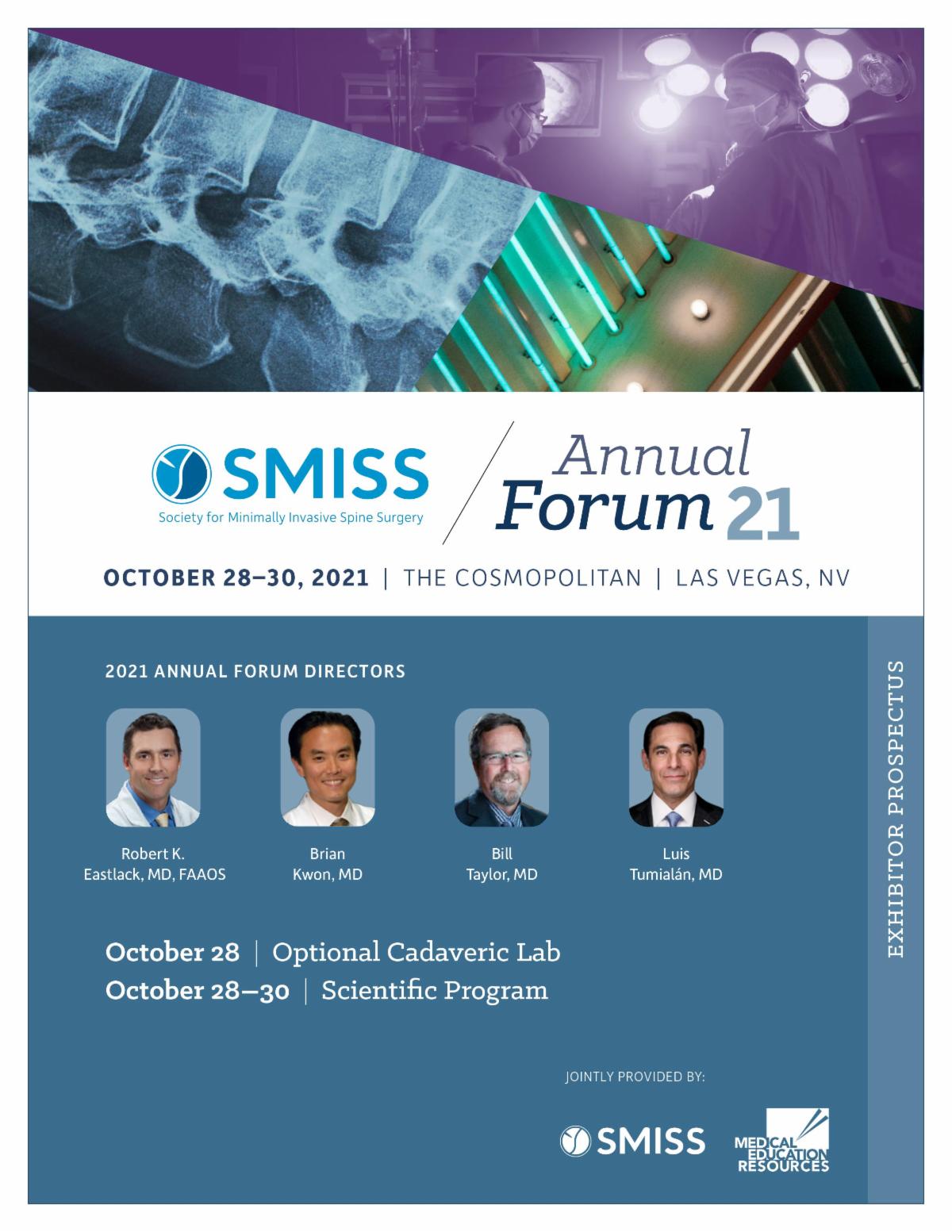
Society for Minimally Invasive Spine Surgery Annual Forum 2021
$ 9.00
Description Include: 137 videos 1 pdf, size: 2.51 GB Target Audience: surgerist Sample video: contact me for sample video Information: October 28–30 | Scientific Program The SMISS Forum gives you practical insights you can immediately use. Previous participants planned to make numerous changes including: > “consider more lateral patients for oblique lateral interbody fusion” > “ERAS protocol for post-op pain management” > “incorporate endoscopic techniques and perhaps prone LLIF” > “plan to start adding robotics” > “increased use of tubular decompression” > “further incorporating navigation into my practice” > “use new drill I saw at meeting” > “may change the bone graft I use for fusions” > “think more about coronal alignment in addition to sagittal” > “improve preparation of the disc space” Topics: Course Syllabus.pdf Session 1 Enabling a More Efficient Prone Lateral Surgery with Viseon MaxView.ts Session 1 Lordosis and LLIF ACR is safe, effective, and provides reliable lordosis.ts Session 1 Lordosis and LLIF Alternative MIS procedures achieve lordosis.ts Session 1 MIS Deformity Correction Discussion.ts Session 1 MIS Deformity Correction Lateral Just Makes Sense for ASD.ts Session 1 MIS Deformity Correction Posterior Is the Best Answer.ts Session 1 Navigation Robotics and Lateral Discussion.ts Session 1 Navigation Robotics and Lateral Safer and better for the patient.ts Session 1 Navigation Robotics and Lateral Time consuming and not necessary.ts Session 1 Porous PEEK The Best of All Worlds.ts Session 1 Single Position Surgery Deformity and SPS What you need to know. What’s next.ts Session 1 Single Position Surgery Discussion.ts Session 1 Single Position Surgery Lateral works, why risk it.ts Session 1 Single Position Surgery Neuromonitoring and SPS Is SSEP is the new standard.ts Session 1 Single Position Surgery PTP Try it you’ll like it.ts Session 1 Single Position Surgery Thoracic lateral SPS What you need to know. What’s next.ts Session 2 Case Presentation L5-S1 Spondylolisthesis Clinical History & Radiographic Studies.ts Session 2 Complication Management and Avoidance Anterior and Posterior. Intraoperative the Unthinkable.ts Session 2 Discussion Case Presentation L5-S1 Spondylolisthesis.ts Session 2 Discussion Complication Management and the Science of Cellular Graft Materials.ts Session 2 Discussion Gill Laminectomy for L5-S1 Spondy, and Virtual Reality for Education.ts Session 2 Gill Laminectomy for L5-S1 Isthmic Spondylolisthesis.ts Session 2 L5-S1 Isthmic Spondylolisthesis; Why I Prefer ALIF PSF.ts Session 2 Midline Cortical Screws and Bilateral PLIF.ts Session 2 Patient L5-S1 Spondylolisthesis ALIF or OLIF Only.ts Session 2 Patient L5-S1 Spondylolisthesis MIS TLIF Is the Treatment of Choice.ts Session 2 The Science of Cellular Graft Material. Does the Data Support the Cost.ts Session 2 The Unique Biomechanics of Spondylolisthesis at the Lumbosacral Junction.ts Session 2 Virtual Reality and Spinal Surgery the Future of Resident Training.ts Session 3 Analysis of Peri-operative Events Reported from a 200-subject Multicenter, Prospective Lateral Interbody Fusion Study.ts Session 3 Anterior Longitudinal Ligament Release from a Posterior Approach- an Alternative to Three-column Osteotomy.ts Session 3 Attrax Putty Vs. Autograft in XLIF a Prospective Randomized Single-center Evaluation of Radiographic and Clinical Outcomes.ts Session 3 Blade-based Retraction Allows Safe Oblique Pre-psoas Approaches Despite Inadequate Oblique Corridors and High-riding Psoas.ts Session 3 Can Disc Distraction Using a Percutaneous Approach Reduce Spondylolisthesi.ts Session 3 Clinical and Radiographic Outcomes for High-risk Subjects Undergoing Single-level or Multi-level Lumbar Fusion Using a Cellular Bone Allograft.ts Session 3 Combined OLIF and Transmuscular Staged Correction of Osteomyelitis and Discitis.ts Session 3 Comparison of Adolescent Idiopathic Scoliosis (AIS) Correction – Open Vs. Minimally Invasive Cohorts a 2-year Radiographic and Surgical Outcome Study.ts Session 3 Comparison of Early “Prone Lateral” Experience Vs “PTP” Proceduralization- Learnings, Efficiencies, and Peri-op Outcomes.ts Session 3 Comparison of Patient Preference, Understanding, and Sentiment for Minimally Invasive Vs. Open Spine Surgery.ts Session 3 Comparison of PTP and LLIF Techniques for Segmental Lordosis Correction.ts Session 3 Decision-making Factors Leading to Fusion Vs. Decompression for One-level Degenerative Spondylolisthesis.ts Session 3 Differences in Predictors of Readmission and Extended Length of Stay Between Open, Minimally Invasive, and Robotic Single-level Lumbar Fusion Surgery.ts Session 3 Does Minimally Invasive Adult Deformity Surgery Result in Improved Perioperative Recovery and Function.ts Session 3 Does the Global Alignment and Proportion (GAP) Score Predict Mechanical Complications in Circumferential Minimally Invasive Surgery for Adult Spinal Deformity.ts Session 3 Effectiveness and Cost-effectiveness of Full-endoscopic Transforaminal Discectomy Vs. Open Discectomy for Sciatica.ts Session 3 Evaluation of the Ability of a Novel Curved Drill to Create an Arcuate Tunnel Without Breaching the Spinal Canal.ts Session 3 Feasibility and Outcomes of Mini Open Correction and Fusion for Adolescent Idiopathic Scoliosis (AIS) 2-5 Year Follow-up.ts Session 3 Hybrid Cervical Total Disc Arthroplasty Combined With Anterior Cervical Discectomy and Fusion an Analysis of Clinical Outcomes.ts Session 3 Implementation of an Enhanced Recovery After Surgery (ERAS) Program for Patients Undergoing Same-day Outpatient Elective.ts Session 3 Improvement in Sagittal Alignment Following MIS TLIF- Unilateral Vs. Bilateral Static Interbody Cages.ts Session 3 Incidence of Voice Vs. Swallowing Complications Following Stand-alone ACDF.ts Session 3 Indirect Decompression Demonstrates Similar Clinical Outcomes to Direct Decompression in Single Level Circumferential Fusion for Isthmic Spondylolisthesis.ts Session 3 Indirect Decompression in Lateral Lumbar Interbody Fusion. Indications and Potential Limitations.ts Session 3 Intraoperative Learning Curve on Navigated Prone Lateral Lumbar Interbody Fusion Pearls and Pitfalls.ts Session 3 Lateral Decubitus Single-position Anterior-posterior (AP) Fusion Shows Equivalent Results to Minimally Invasive Transforaminal Lumbar Interbody Fusion at One-year Follow-up.ts Session 3 Long-term Prospective Outcomes of a Novel Spacer in Single-level Instrumented Lumbar Interbody Fusions.ts Session 3 Lumbar Facet Arthroplasty for Lumbar Spondylolisthesis – 2-year Outcomes.ts Session 3 Minimally Invasive Modification of Goel-Harms Atlantoaxial Fusion Utilizing Percutaneous Screws and Intraarticular Cage Is Feasible and Results in Decreased Blood Loss.ts Session 3 Minimally Invasive Spine Surgery Program Implementation in University-affiliated Acute Care Peripheral Rural Community Hospital.ts Session 3 Objective Evaluation of Dynamic Balance Among Lumbar Disc Herniation Patients Before and After Discectomy.ts Session 3 P-15 Peptide Is Inferior to Demineralized Bone Matrix for Spine Fusion in a Rat Model.ts Session 3 Patient Satisfaction Reviews for 967 Spine Neurosurgeons.ts Session 3 Patient-reported Outcomes and MCID Achievement Following Lumbar Decompression in Patients With Workers’ Compensation Vs. Private Insurance.ts Session 3 Patients’ Preferences for the Treatment of Lumbar Disc Herniation a Discrete Choice Experiment.ts Session 3 Quantifying Complications Associated With Robotic Elective Spine Surgery.ts Session 3 Reoperation Following Lumbar Discectomy for Cauda Equina Syndrome- Retrospective Review.ts Session 3 Return to Work, Activities of Daily Living and Disability Improvement 12-month Outcomes of an FDA IDE.ts Session 3 Robotic Navigation-assisted K-wireless Pedicle Screw Times, Accuracy, and Reasons for Conversion in Adult Degenerative Spine Surgery.ts Session 3 Saphenous Ssep Monitoring of Femoral Nerve Health During Lateral Lumbar Interbody Fusion (LLIF).ts Session 3 Single-level MIS TLIF Vs. ALIF at L5S1 a Comparison of Patient-reported Outcomes and Recovery Ratios.ts Session 3 Single-position Transpsoas Corpectomy and Instrumentation in the Thoracolumbar Spine for Different Clinical Scenarios.ts Session 3 Single-position, Single-incision Approach for Lateral Interbody Fusion With Supplemental Posterior Fixation – Technique and Comparative Outcomes to Two-incision and Two-position Approaches.ts Session 3 The Impact of Computer-assisted Navigation on Charges and Readmission in Lumbar Spinal Fusion.ts Session 3 The Influence of Preoperative Narcotic Consumption on Patient-reported Outcomes of Lumbar Decompression.ts Session 3 The Lateral in the Prone (LIP) Position – Case Series of Novel Indications, Nuances, and Outcome.ts Session 3 The Relative Contribution of Anterior Techniques Vs. Posterior Techniques in Restoring Spinal Balance in Circumferential Minimally Invasive Surgical Correction.ts Session 3 The Role of Intraoperative Neuromonitoring Modalities (EMG, MEP, & SSEP) in Anterior Cervical Spine Surgery.ts Session 3 The Trends in Robot-related Complications, Operative Efficiency, Radiation Exposure, and Clinical Outcomes After Robot-assisted Spine Surgery.ts Session 3 Three-year Conversion Rate of Lumbar Microsurgical Decompression to Lumbar Fusion.ts Session 3 Titanium and PEEK Cages Have Similar Outcomes in Single-level MIS-TLIF a Matched Cohort Analysis With Long-term Follow-up.ts Session 3 Using an Electrical Conductivity Loop Control System for Automated Breach Prevention During Robotic Power Drilling of Bone.ts Session 3 What Is a Better Value for Your Time, ACDF or CDA.ts Session 4 Augmented Reality Extended Reality Mixed Reality in Spine Surgery.ts Session 4 Case Presentation- Patient With Chronic Narcotic Use Who Needs a Multiple Level Fusion – Operate and Get the Patient Out of Pain.ts Session 4 Case Presentation- Patient With Chronic Narcotic Use Who Needs a Multiple Level Fusion – Wean Down Before Surgery.ts Session 4 How Opioids Affect Short-term and Long-term Outcomes- the Data.ts Session 4 Is Intra-Operative Use of Opioids in Spine Surgery Necessary.ts Session 4 Non-Invasive In Vivo MR Spectroscopy of Lumbar Discs to Assess LBP.ts Session 4 Opioids in Spine Surgery- Perspectives in Japan.ts Session 4 Robotics and their Value in Your OR.ts Session 4 SPECT for MIS Spine Surgery- SPECT Plays a Critical Role in Accurate Decision-Making.ts Session 4 Spinal Navigation- Impact in Minimally Invasive Spinal Surgery.ts Session 4 The Opioid Epidemic- Where Have We Been- Where Are We Now- Where Are We Going.ts Session 4 The Value Proposition for New Technology- Financial Decision Making for Adopting New Technology, Hospital vs. ASC.ts Session 4 Utility of SPECT for MIS Spine Surgery.ts Session 4 What Difference Has ERAS Made on Spinal Surgery – Optimization of the Frail Patient.ts Session 5 Biiportal Endoscopic Hemilaminectomy Microdiscectomy.ts Session 5 Impact of Bone Lineage Committed Cellular Allograft on MIS Fusion.ts Session 5 Minimally Invasive Scoliosis Surgery- Staged Surgery Is Better.ts Session 5 MIS Deformity- Using Three Positions Is Still the Most Effective Approach.ts Session 5 OLIF for Anterior Column Realignment.ts Session 5 PTP L5 S1 TLIF for Lumbar Lordosis Reconstruction.ts Session 5 Reconstruction of the Anterior Column – Which Approach Is the Best When L5 S1 Is Included ALIF with LLIF Rules the Roost.ts Session 5 Reconstruction of the Anterior Column- Which Approach Is the Best When L5S1 Is Included MIS Osteotomies PCO PSO.ts Session 5 Same Day MIS Correction Surgery Is Optimal for the Patient.ts Session 5 Single Position for the Anterior Column Reconstruction but My Arms Are Killing Me With Lateral Screws.ts Session 5 Single vs. Limited Position vs. Standard- PTP Correction and Cases.ts Session 5 Single vs. Limited Position vs. Standard- Single Position Surgery – Faster and Cool.ts Session 5 What Is the Rationale and What Is Feasible With MIS Deformity Correction Today.ts Session 5 What One Patient’s Experience Can Teach Us About Ethical Opioid Prescribing.ts Session 6 Advanced Disc Pathology Transforaminal Decompression and Discectomy for Far-lateral Pathology.ts Session 6 Discussion Should Surgeons Undertake the Learning Curve of Endoscopic Spine Surgery.ts Session 6 Endoscopic Spine Surgery Identify Complications.ts Session 6 Interlaminar Decompression and Discectomy Technique and Data Using Uniportal and Biportal Techniques.ts Session 6 L4-L5 Grade 2 Spondylolisthesis with Stenosis Endoscopic Fusion C’mon Man.ts Session 6 L4-L5 Grade 2 Spondylolisthesis with Stenosis- Lateral Lumbar Interbody Fusion.ts Session 6 L4-L5 Grade 2 Spondylolisthesis with Stenosis- Posterior Only – TLIF.ts Session 6 Prone Lateral for L4-L5 Grade 2 Spondylolisthesis with Stenosis.ts Session 6 Should Surgeons Undertake the Learning Curve of Endoscopic Spine Surgery Uh…No!.ts Session 6 Tackling the Learning Curve of Endoscopic Spine Surgery is the Way to go!.ts Session 6 Transforaminal Endoscopic Discectomy Tips and Tricks.ts Session 6 Transforaminal Endoscopic Discectomy Trans PARS Approach.ts Session 6 What to Do When Complications Occur in Endoscopic Spine Surgery Nerve Issues.ts Session 8 2 Level ACDF in the ASC Setting.ts Session 8 Ambulatory ACDF – When Is an ASC Appropriate.ts Session 8 Case Presentation L3-4 LLIF for PJF Above Previous L4-S1 Fusion Surgery Needs to Be Done in Hospital or Is ASC Adequate.ts Session 8 Case Presentation Two-Level ACDF for Myelopathy. Is This Patient the Ideal Candidate for an ASC.ts Session 8 Complications ASA 3 in the ASC Can You Do It Safely and Is It in the Best Interest of the Patient.ts Session 8 Complications Revision MIS Discectomy – Drowning in CSF.ts Session 8 Critical Team Members to a Successful ASC Surgery.ts Session 8 Do the Economics of ASCs Make Sense For Whom.ts Session 8 L3-4 LLIF for PJF Above Previous L4-S1 Fusion ASC Is Adequate.ts Session 8 Real Hospital vs ASC for L3 4 LLIF Above L4 5 Fusion.ts Session 8 Regional Anesthesia for Lumbar Surgery.ts Session 8 Role of ASCs in COVID.ts Session 8 Same-day Awake Lumbar Fusion.ts Session 8 When Do You Know You’re Ready to Take Cases to ASC Is it All About Procedural Time.ts
Call to order! 641-664-3990.
Related products
-
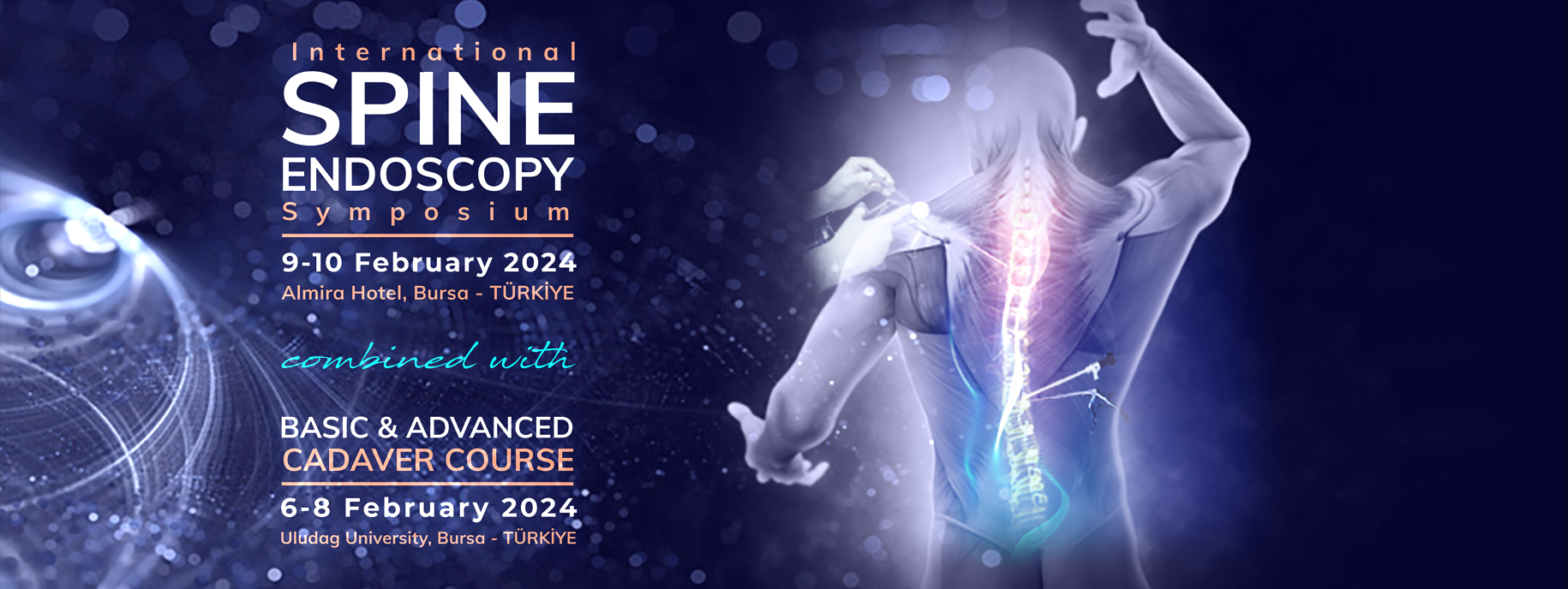 Turkey Society of Unilateral Biportal Endoscopic Spine Surgery International Spine Endoscopy Symposium 2024
This product has multiple variants. The options may be chosen on the product page
Turkey Society of Unilateral Biportal Endoscopic Spine Surgery International Spine Endoscopy Symposium 2024
This product has multiple variants. The options may be chosen on the product page
-
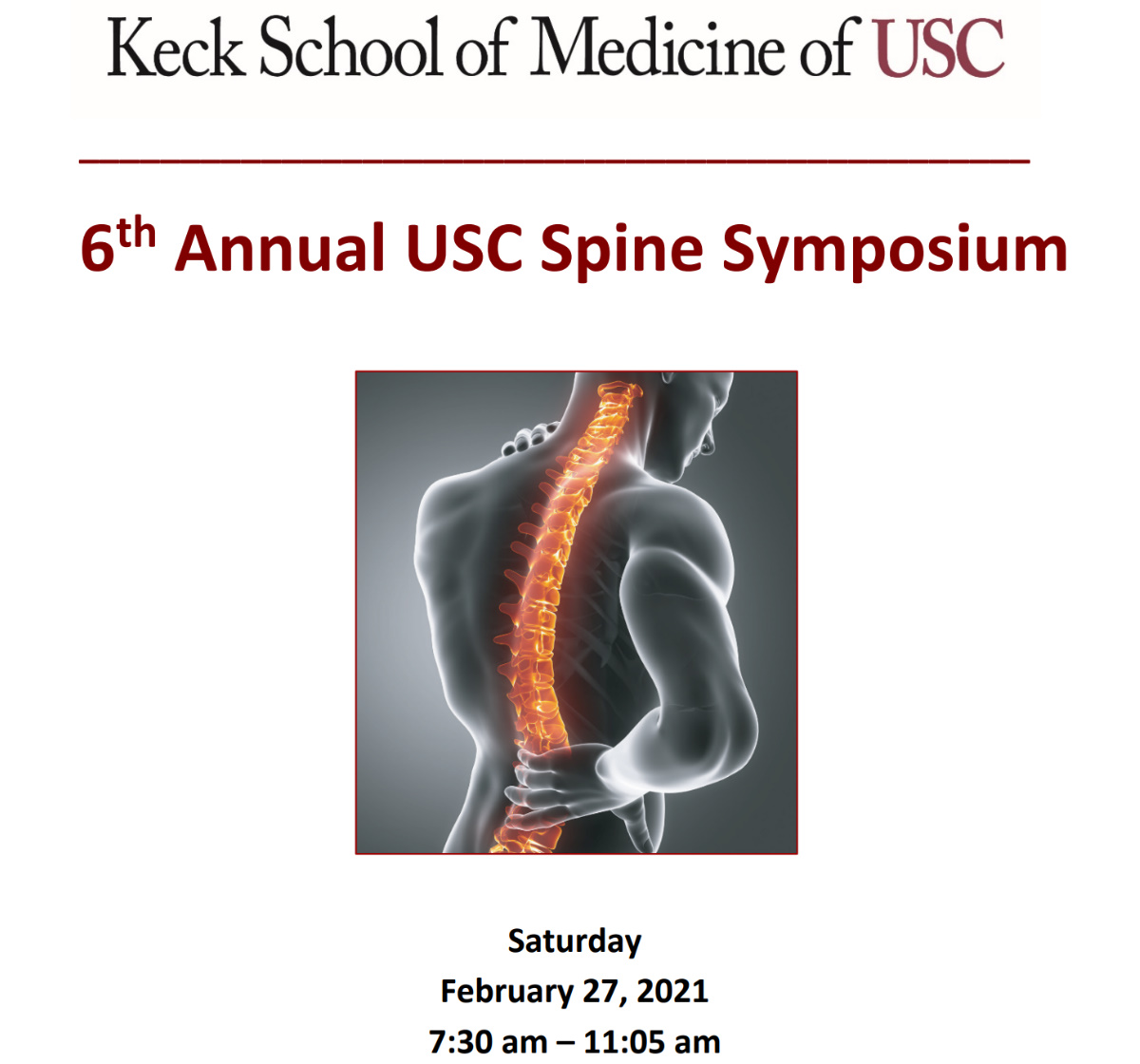 Keck USC 6th Annual USC Spine Symposium 2021Keck USC 6th Annual USC Spine Symposium 2021
This product has multiple variants. The options may be chosen on the product page
Keck USC 6th Annual USC Spine Symposium 2021Keck USC 6th Annual USC Spine Symposium 2021
This product has multiple variants. The options may be chosen on the product page
-
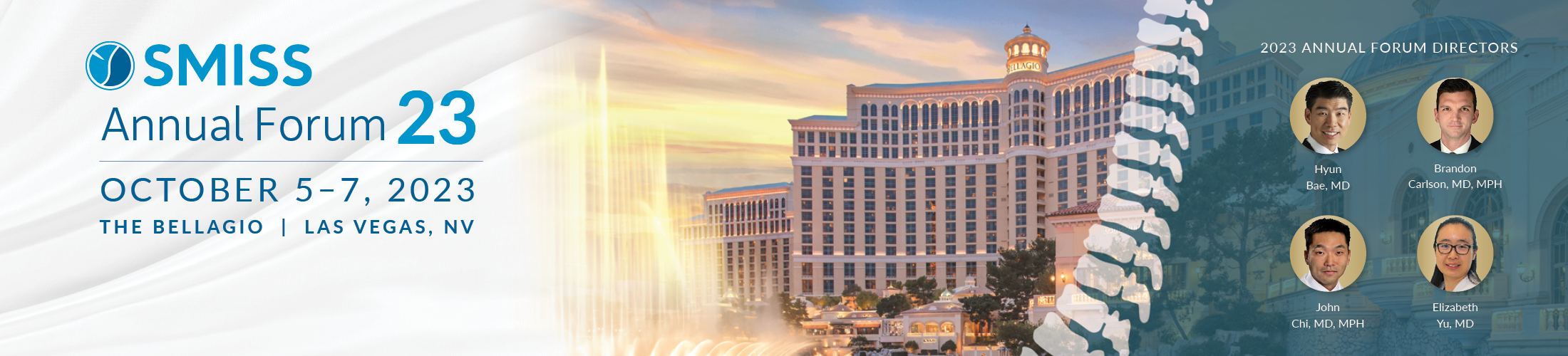 Society for Minimally Invasive Spine Surgery Annual Forum 2023Society for Minimally Invasive Spine Surgery Annual Forum 2023
This product has multiple variants. The options may be chosen on the product page
Society for Minimally Invasive Spine Surgery Annual Forum 2023Society for Minimally Invasive Spine Surgery Annual Forum 2023
This product has multiple variants. The options may be chosen on the product page